
Suddenly, one day you realize that one side of your baby's head is flatter than the other. The first thing you do is search the internet to find out what could be wrong, and you also consult your pediatrician and your closest family circle. There's no doubt about it: my baby has plagiocephaly. And the next question you ask yourself is: what can I do to correct it and prevent it from getting worse?
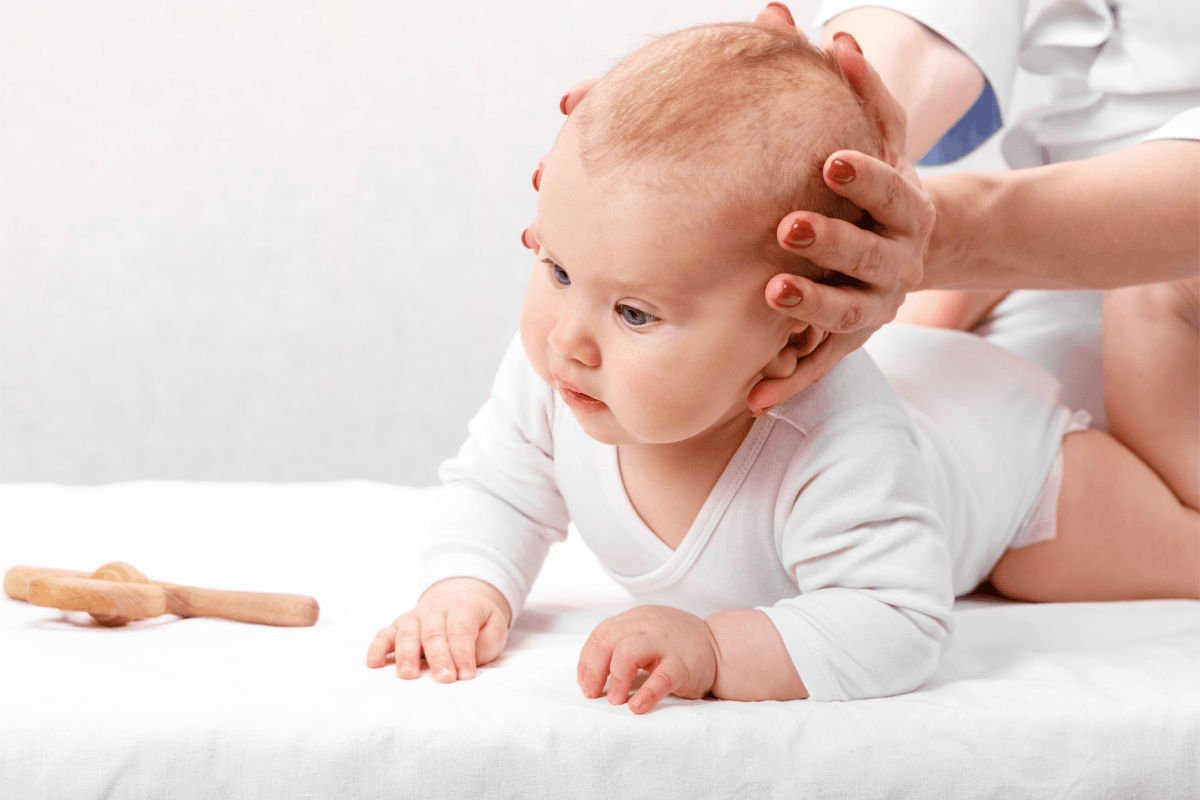
Today, at ECUS Kids, we talk to Esther Martínez, a physical therapist and pediatric osteopath at the Entheos clinic (Yecla). Esther treats babies with cranial asymmetries such as plagiocephaly on a daily basis, as well as other problems such as torticollis, infant colic, swallowing problems, hip dysplasia, etc.
We wanted to talk to her about plagiocephaly, its causes, consequences, how we can prevent it at home, and when it would be time to see a physical therapist for pediatric manual therapy.
What is plagiocephaly and why does it occur?
Plagiocephaly is a type of deformity that appears asymmetrically on the back of the baby's head, i.e., on only one side.
Some cranial deformities can be observed at birth. For example, because the baby was poorly positioned in the birth canal, which often occurs in multiple pregnancies; because it was a very long delivery and the baby remained stuck for a long time; or even in instrument-assisted deliveries.
However, positional or postural plagiocephaly is more common. Plagiocephaly usually occurs due to a cervical problem in the baby's neck. The baby is comfortable turning to the same side, which ends up producing sustained pressure on the baby's skull.
Is plagiocephaly a common problem?
How many babies do you think have plagiocephaly? In recent years, it has become much more common than it seems. Do you know why? Watch the interview until the end to find out what a pediatric physical therapist like Esther thinks.
What are the consequences of plagiocephaly?
There are three types of consequences of plagiocephaly: aesthetic, cranial, and motor development.
In terms of aesthetic consequences, we may find one ear more detached than the other, one cheekbone more prominent than the other, or even a bulge in part of the forehead.
The consequences at the cranial level occur because the first cervical vertebra is located at the base of the skull. If the base of the skull is rotated due to plagiocephaly, the first vertebra is already slightly rotated, and this can cause the spine to grow out of alignment. At the temporal level, as this is forward or open, the jaw (TMJ) may grow asymmetrically and may lead to occlusion or bite problems. At the orbital level, if one of the orbits grows asymmetrically with respect to the other, the internal muscles do not develop in the same way and we may encounter future strabismus.
Babies with plagiocephaly or brachycephaly often have delayed motor development. In most cases, they develop asymmetrically because, as they are always turned to the same side, they do not integrate the side they cannot see as well. We may find babies who do not use both arms equally well, or who do not turn to one side, or who do not use their hips in the same way when crawling...
Can plagiocephaly be prevented?
Esther is clear: early detection is the best prevention. The way to detect it is to observe that the baby's head is always turned to the same side, or that their head is tilted so that one ear is always closer to the shoulder than the other. Observing them is the best way to detect plagiocephaly so that you can seek medical advice, remove the cause or root of the problem, and follow a series of recommendations to prevent the plagiocephaly from getting worse.
Three things we can do at home to prevent plagiocephaly in our babies are:
- Spending time on their stomach, on the changing table or bed.
- Spend time with us.
- Port it.
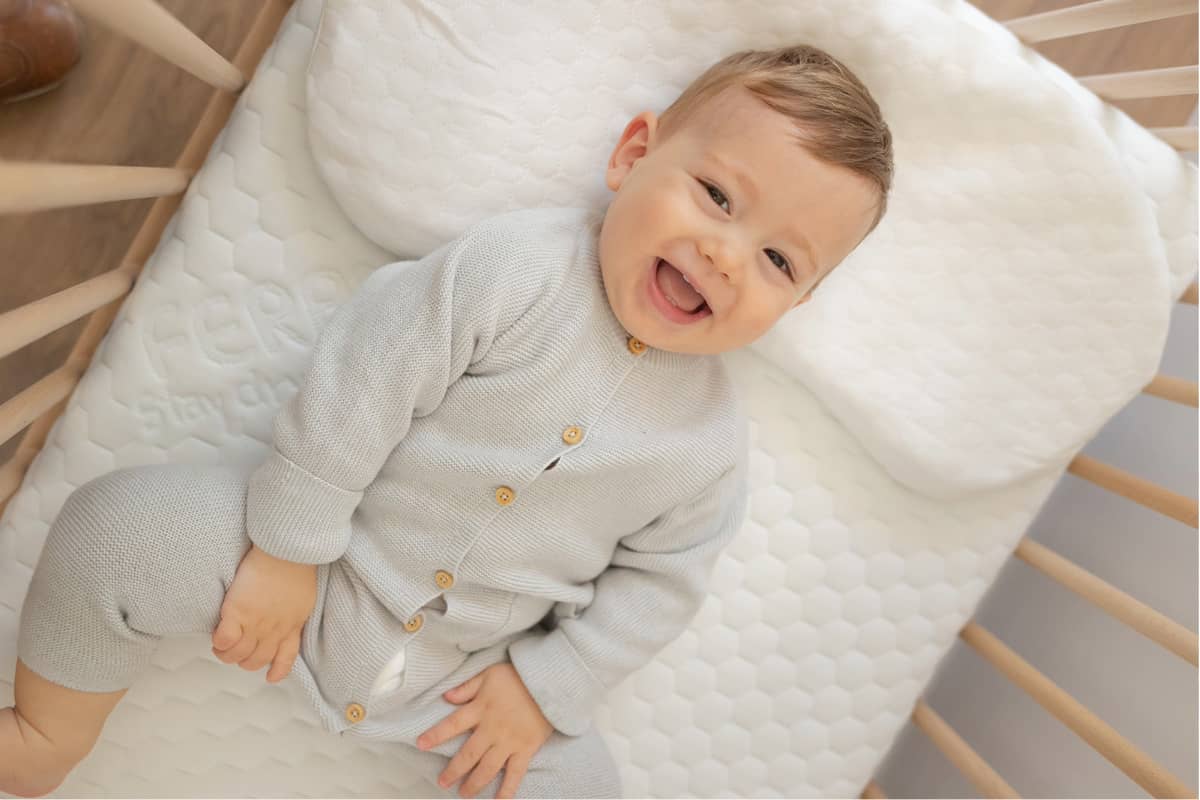
At ECUS Kids, we add a fourth: choose a good sleeping surface that reduces pressure as much as possible. When the baby is sleeping, we cannot carry them or place them on their stomach. It is not safe for babies to sleep on their stomachs. All health professionals agree that babies should sleep on their backs to prevent SIDS. So, when your baby sleeps, make sure they do so on a good mattress: an ECUS Kids mattress!
When should we go to a pediatric physical therapy clinic?
Esther recommends that if we think our baby has plagiocephaly, the sooner we seek help from a specialist, the better.
The later we detect cranial deformity, the less room for improvement we have due to the closure of the sutures and fontanelles of the baby's skull.
Plagiocephaly detected in the first months of life can be completely corrected, whereas if you seek consultation after the baby is 6 months old, there is much less room for improvement, and in some cases, the fontanelles are already closed and cannot be molded even with manual therapy.