
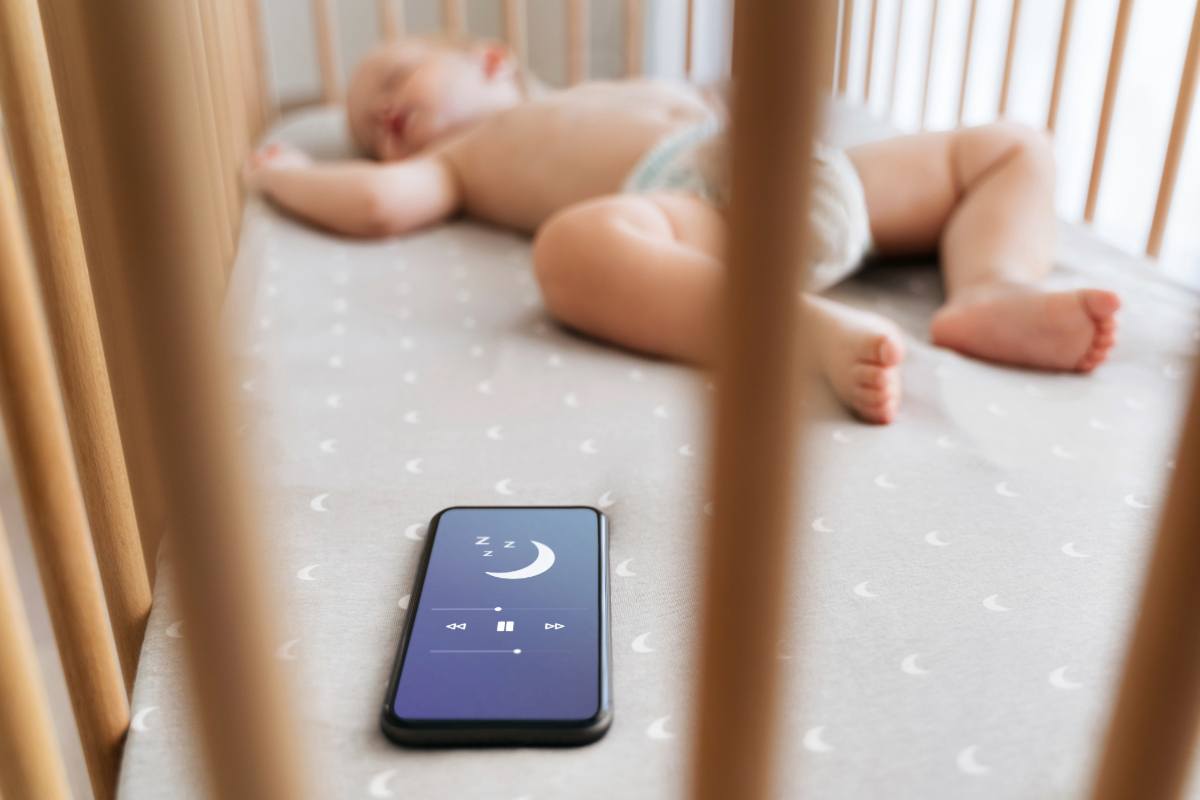
How many times have we seen a baby calm down and stop crying at the sound of a hair dryer or extractor fan? The sound produced by these devices is called white noise, and in this post we explain what it is, why it calms babies, and whether it is good to use.
What is white noise?
White noise is a type of sound that contains all audible frequencies at equal intensity, creating a constant, uniform sound that, in a way, prevents other sounds from reaching our auditory perception.
By masking other environmental noises that could be distractions, white noise creates a more stable and predictable environment, which facilitates sleep and continuity of sleep for babies.
Although sounds from nature, such as the sound of ocean waves or rain, are most recommended, in most cases artificial sounds must be used to create white noise.
White noise to calm babies
One of the most popular uses of white noise is to relax babies and help them fall asleep. Many parents have reported that white noise helps their children sleep better and calms their crying.
The theory behind this is that white noise can mimic the sounds a baby hears in the womb, creating a feeling of safety and comfort. That is why the first therapeutic use of this sound was in neonatal ICUs, where the sounds of the womb were played and the noises of the incubators were masked to calm the babies.
In addition, as with adults, white noise can mask other noises in the environment that could wake or disturb the baby, such as their own crying. There is a theory that the baby stops hearing themselves and therefore stops crying. It also prevents them from hearing other sudden sounds that may wake them up.
White noise for babies: potential risks
The medical and scientific community offers mixed recommendations on the use of white noise with babies. While some studies suggest clear benefits, others warn of possible risks.
The American Academy of Pediatrics (AAP) warns that its use should be occasional, as it could lead to dependency, making it difficult for babies to sleep without these sounds.
Another concern is that prolonged exposure to high-volume white noise could affect babies' hearing or interfere with the development of their ability to perceive and process sounds, negatively affecting their language development.
How to use white noise for babies
White noise can be an effective tool for both adults and babies, as long as it is used appropriately and in moderation. For babies, it can provide a familiar and soothing sound environment, although it is important to follow safety recommendations to avoid possible adverse effects.
- It is crucial to use white noise devices wisely and not rely on them excessively to calm the baby.
- It is advisable that the device emitting this sound be at least 2 meters away from the crib and that the volume not exceed 50 decibels. Using an excessively high volume could cause damage to your hearing.
- It is best to use programmed white noise, so you will not be exposed to this sound all night long.
- White noise can be used as an emergency resource for babies, but it should not be included as part of the baby's sleep routine.
However, the truth is that there is insufficient medical evidence on the efficacy and safety of using white noise to treat pediatric insomnia. As with any tool, it is advisable to consult a healthcare professional before incorporating white noise on a regular basis.