

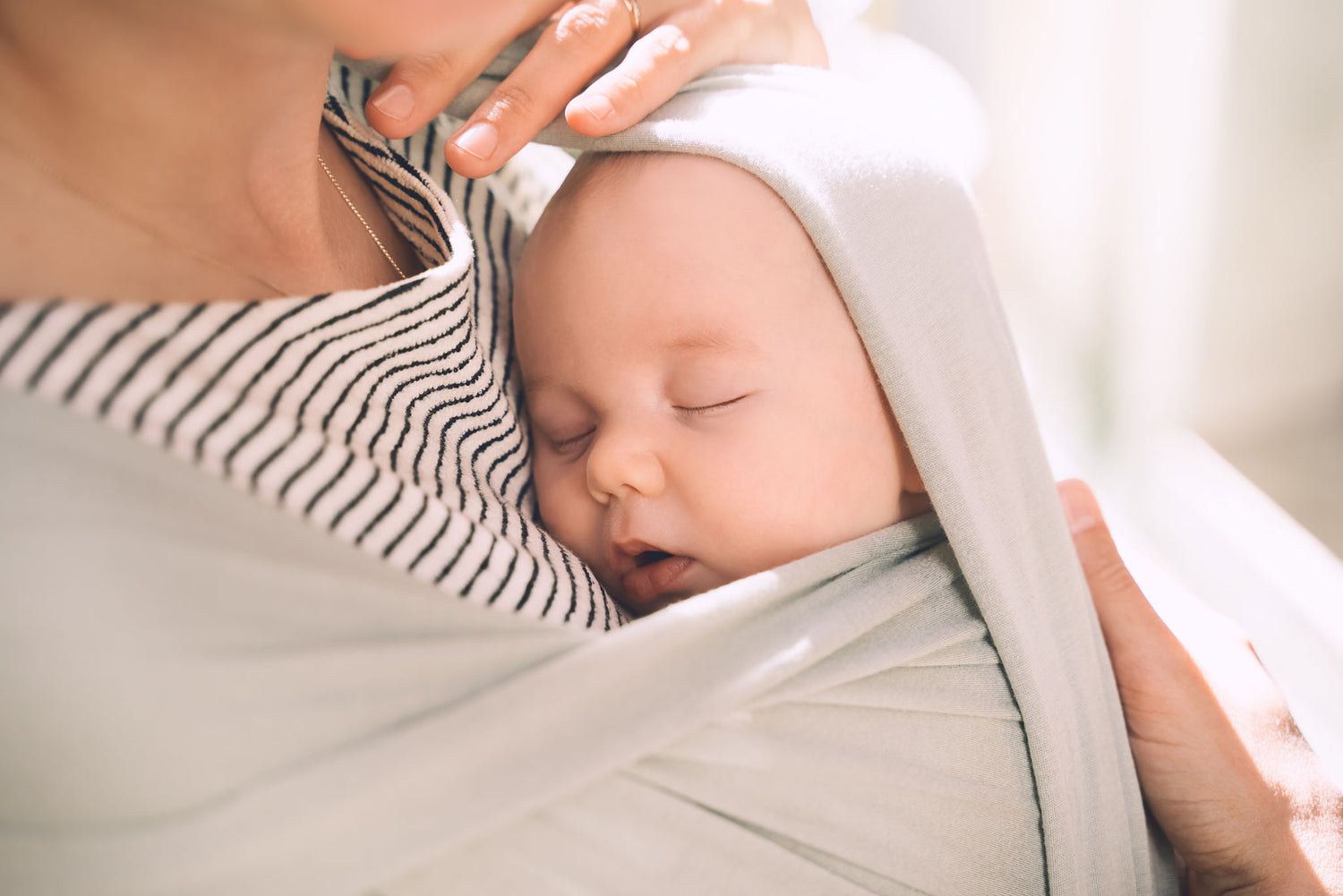
Practicing ergonomic babywearing can help prevent and treat plagiocephaly in babies, as it reduces pressure on the baby's skull and promotes rotation of the spine.
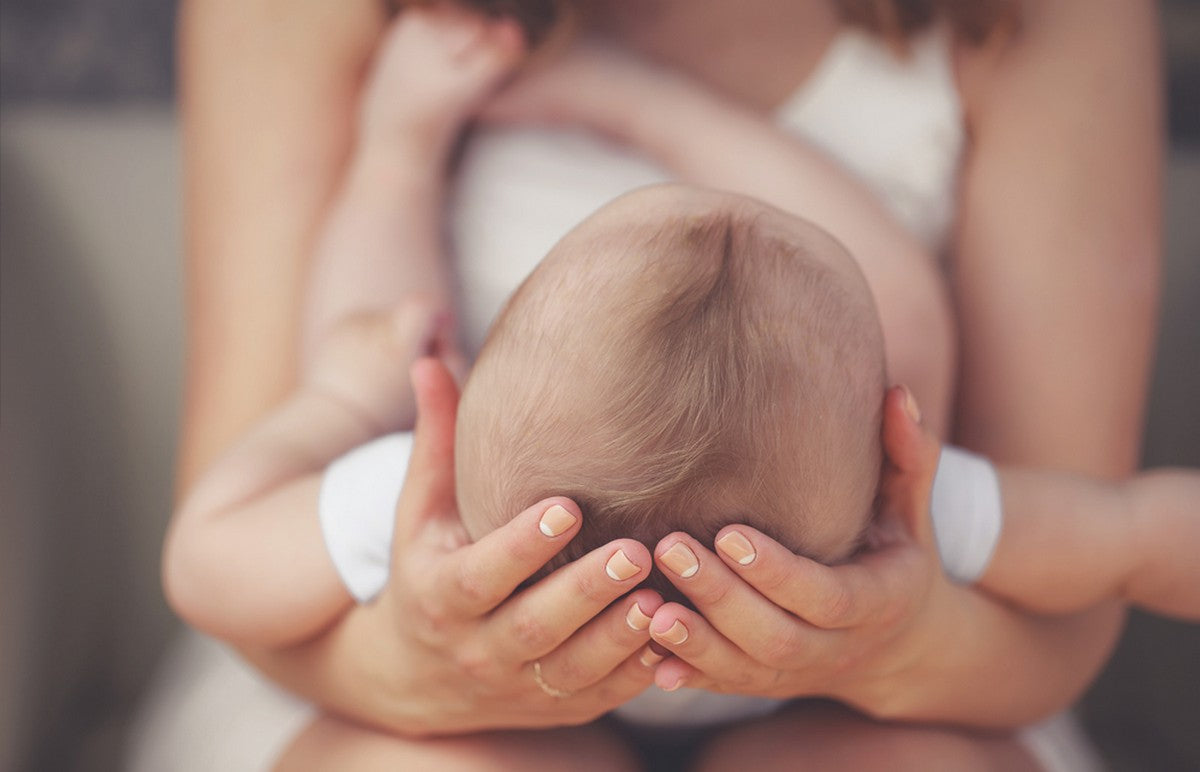
Postural plagiocephaly occurs when babies spend a lot of time lying on hard surfaces such as strollers, bouncers, etc., devices where their neck mobility is limited and therefore they tend to always rest on the same area of their head. This continuous pressure is what causes flat head syndrome or plagiocephaly.
The best way to prevent plagiocephaly is to avoid any pressure on the baby's head as much as possible, especially during the first months of life, when the baby's skull is more malleable because its bones and sutures are not yet fully fused. A very simple way to do this is to hold the baby in your arms or use an ergonomic baby carrier.
What are the benefits of ergonomic babywearing?
Ergonomic babywearing has multiple benefits for both babies and parents. First, it can help us detect more subtle symptoms of plagiocephaly, such as discovering that the baby has a tendency to always look to the same side.
Babywearing helps promote positive development in cases of congenital torticollis and positional plagiocephaly, as it allows parents to change their baby's posture more easily and frequently, alternating the position of the head and allowing it to turn to the opposite side to what it usually does, i.e., forcing it to change the natural position of the neck.
Carrying the baby in an upright position close to the mother or father's body ensures that the spine is properly supported and that the head is not subjected to any pressure, as is the case with strollers.
For ergonomic carrying, the baby should be in the "frog" position, facing their parents' chest. When we notice that the baby is pushing away from the body because they want to look out and receive stimuli, we can place them on the hip, so that they have the choice of looking forward but also taking refuge or even resting their head to fall asleep.
Not all baby carriers are suitable
There are several types of baby carriers that can be useful for carrying babies, such as the stretchy wrap, which is a piece of fabric 70-80 cm wide and approximately 4 meters long that can be tied in a variety of ways. It is the most versatile baby carrier because it ensures that the baby's legs and back are properly positioned. It is the most versatile, but it is also the most complicated to use.
The ring sling is the least ergonomic baby carrier for parents because it rests more on one shoulder than the other. For the baby, however, it is ergonomic and allows more freedom of movement.
Evolutionary backpacks are very comfortable and do not have complex knots, but we have to check if they are truly ergonomic, that is, if they allow for the correct opening of the baby's hips and the correct positioning of their back. The panel where the baby sits must be of the appropriate width, depending on the size of the baby, so that it reaches their knees and allows them to keep them in an "M" shape, slightly higher than the hips.
Each baby carrier is designed for a different stage of the baby's development and should be chosen based on its characteristics, the baby's development, and even daily habits or uses.