

Positional plagiocephaly, commonly known as flat head syndrome, is an increasingly common condition in the first months of a baby's life. It usually occurs when the skull, which is still soft and malleable, receives prolonged pressure in the same area. But the good news is that it can be prevented with a few simple routines and professional supervision.
In this article, we share real advice from pediatric and pediatric physical therapy professionals so that you can protect your baby's health and development from day one.
Alternate the position of the head when sleeping
One of the main recommendations for preventing plagiocephaly is to change the direction in which the baby rests their head when sleeping. According to the Spanish Pediatric Association, although it is essential to always place the baby on their back to prevent SIDS, it is advisable to alternate turning the head to the right and left.
Practice "Tummy Time" every day
Tummy time is one of the most effective tools for preventing flat head syndrome. It consists of placing the baby on their stomach for a few minutes, always under supervision and while they are awake.
According to the American Academy of Pediatrics, it is recommended to start with short sessions from birth and gradually increase to 30-60 minutes per day.
Benefits: strengthens the neck, improves head control, and relieves pressure on the back of the skull.
Limit the use of high chairs and baby bouncers
Excessive use of car seats, swings, or baby bouncers can cause the baby to spend many hours with their head resting on a hard surface. This promotes the development of plagiocephaly.
Alternate visual stimulation
Placing toys, mobiles, or light and sound sources on different sides of the crib helps the baby turn their head naturally, preventing them from always looking in the same direction.
ECUS Kids tip: Change the position of the stimuli every few days to maintain your baby's attention and encourage active neck movement.
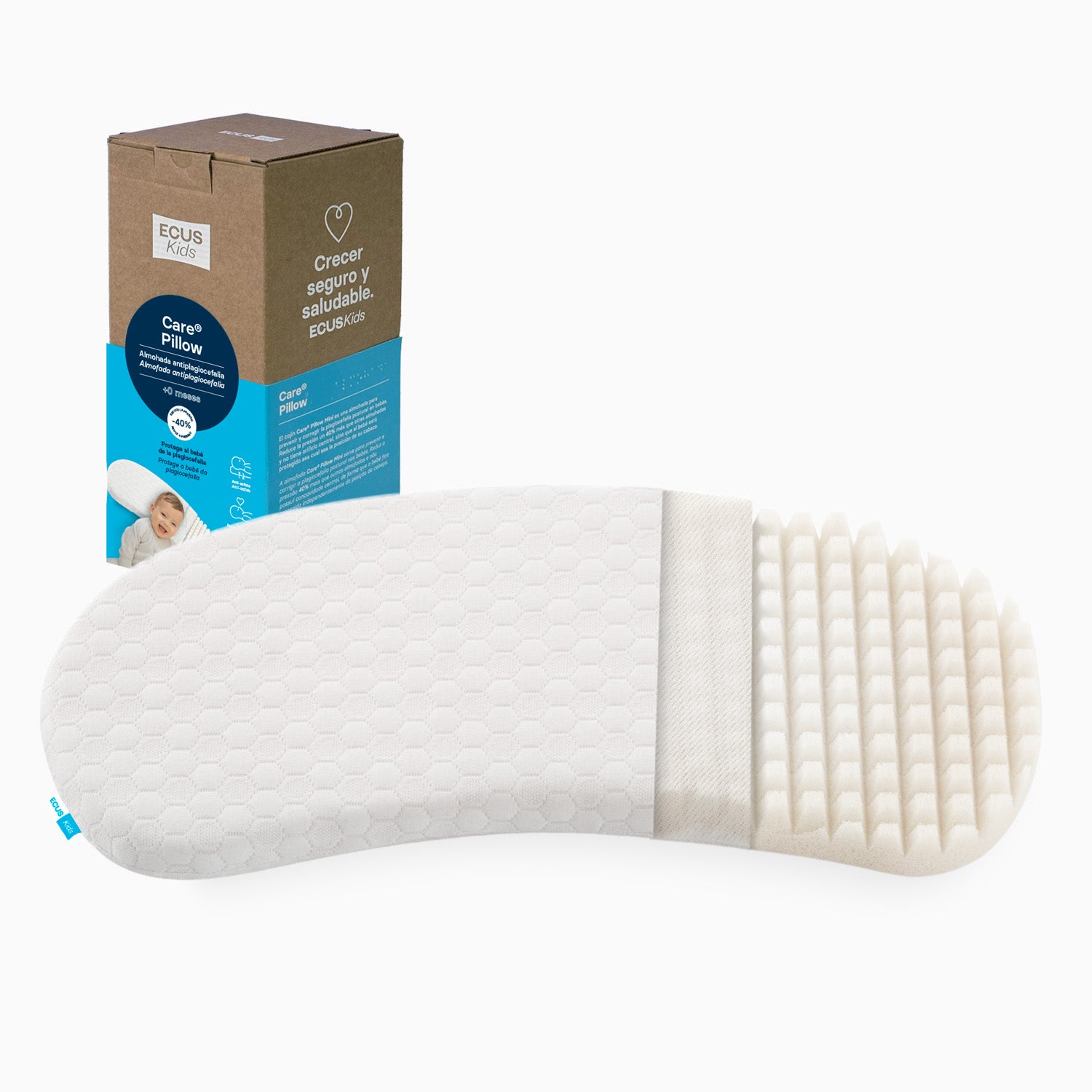
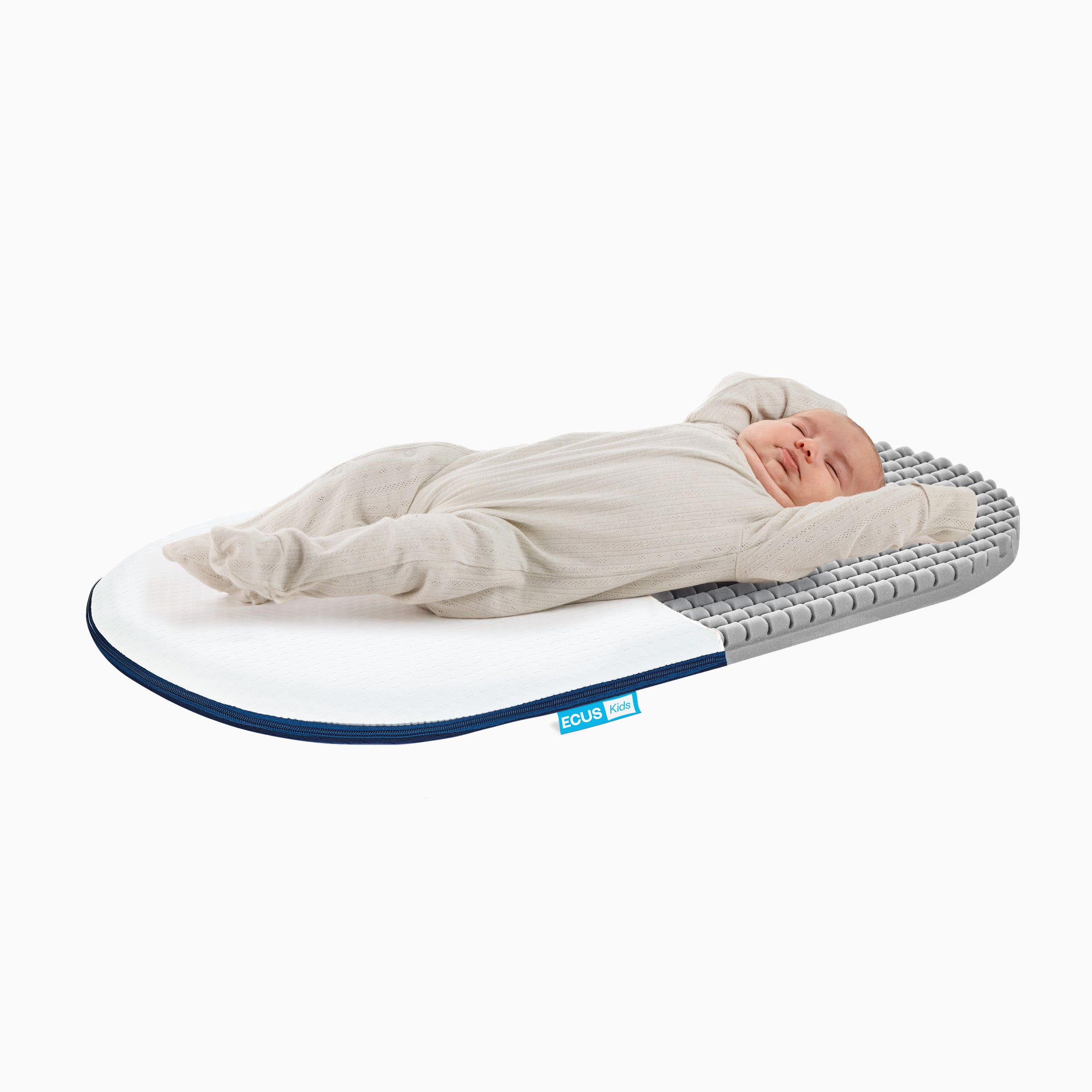
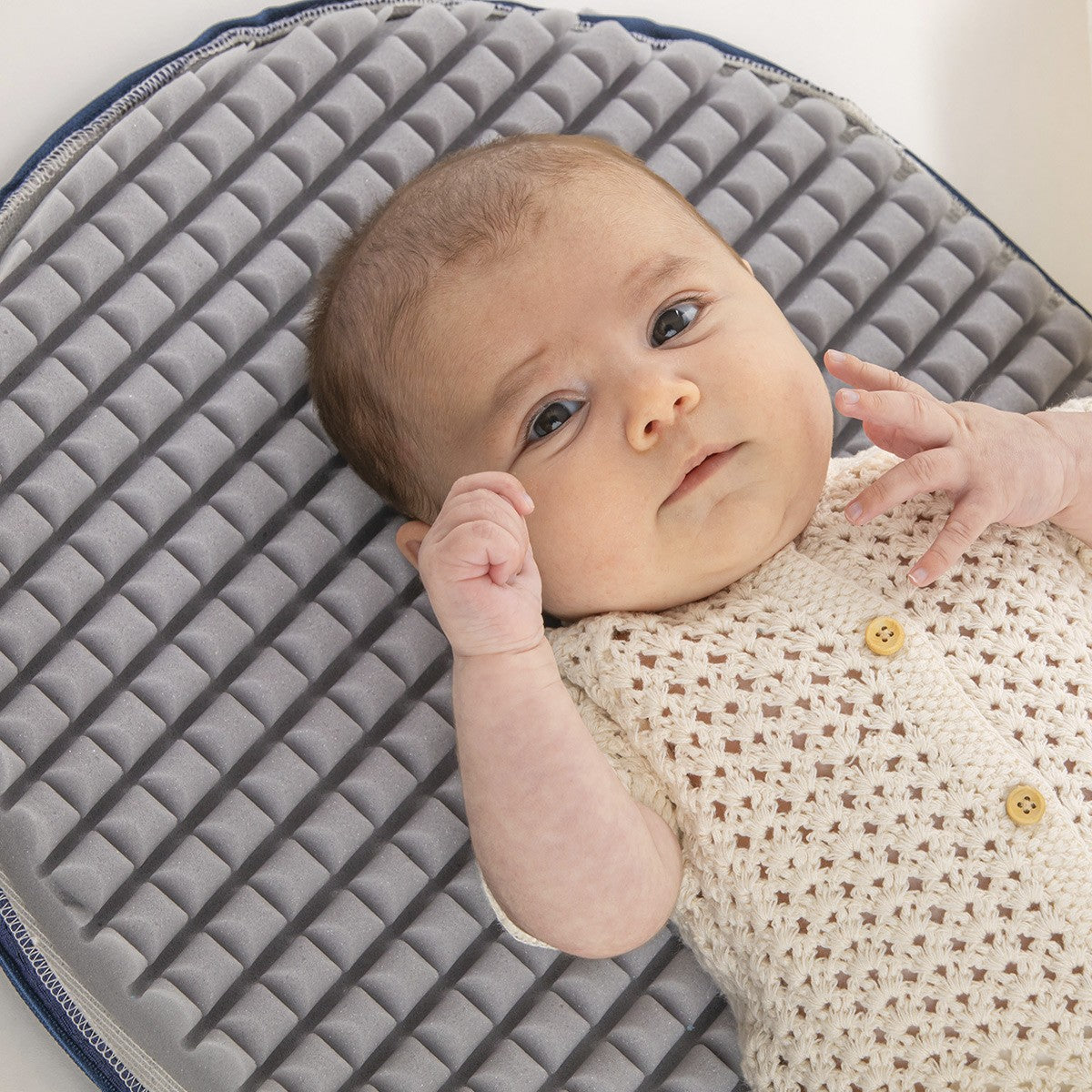
Use a mattress designed to prevent plagiocephaly
Our mattresses are designed with materials that distribute pressure evenly, helping to prevent flat head syndrome. They have health certifications, breathable fabrics, and an ergonomic design that supports the baby's posture during sleep.
Take care of their little heads from day one
Preventing plagiocephaly is a matter of small habits that make a big difference. Alternating positions, dedicating time to tummy time, and choosing a good mattress can help protect your baby's skull development and promote long-term postural health.