


Plagiocephaly is an increasingly common reason for visits to pediatric physiotherapy clinics.
Ever since pediatricians have recommended that babies always sleep on their backs to prevent sudden infant death, cases of plagiocephaly have increased exponentially.
Babies, especially in the first few months, spend most of their time lying down, resting their little heads on hard surfaces. This continuous pressure can end up flattening the back of the skull, which still hasn’t fully closed, and lead to plagiocephaly.
CRIB MATTRESSES
Care® solutions for plagiocephaly


Helps prevent
plagiocephaly

Prevents
suffocation

Prevents
overheating

Ergonomic and
adaptable
Mattresses that help prevent plagiocephaly and suffocation
Care® mattresses are registered with the Spanish Agency of Medicines and Medical Devices (AEMPS), with provisional license number 8849-PS. The AEMPS recognizes that they are mattresses that help prevent plagiocephaly and suffocation, completely safe and recommended for the sleep of the littlest ones.


What is plagiocephaly?
Plagiocephaly (flat head syndrome) is a deformity of a baby’s skull that consists of an asymmetrical sideways flattening at the back of the skull.
It occurs mainly in the first 6 months of life, when the skull is more malleable and the bones of the head (fontanelles) are not yet fully fused.
Plagiocephaly is a condition that’s more common than we think. According to various studies, it affects 47% of babies.
Although it’s a benign condition when mild, it’s important to understand it and prevent it. Moderate or severe plagiocephaly can cause changes in a baby’s skull with consequences that aren’t only aesthetic, but also visual, jaw-related, developmental, etc.

Why does it happen?
Most commonly, it’s positional plagiocephaly caused by posture-related factors.
This is because babies spend many hours a day in the same position, sleeping on their backs to reduce the risk of SIDS and on firm surfaces that put pressure on the back of the head.
In some cases, plagiocephaly can be present at birth due to the baby’s position in the birth canal or lack of space in the womb. It can also occur when babies are premature, in multiple births, or when deliveries are assisted with instruments.
Babies born with congenital torticollis are more likely to develop positional plagiocephaly.

What consequences does it have?
Plagiocephaly is not just an aesthetic issue.
Studies show that it may be linked to other health problems that affect babies’ development and growth—on an aesthetic, developmental, and cranial level. These include:
- Vision problems (strabismus, astigmatism...).
- Hearing problems (infections such as otitis media)
- Dental malocclusion (bite problems).
- Cognitive or psychomotor delays in the development of fine and gross motor skills (difficulty crawling, moving arms and legs asymmetrically...)
- Language delay or delays in social skills, etc.

Why is the mattress important?
The mattress your baby sleeps on should apply as little pressure as possible to their head to help prevent skull deformation.
In the first weeks of life, a baby can sleep up to 18 hours a day! And the medical recommendation is that they sleep on their back to avoid the risk of suffocation and sudden infant death.
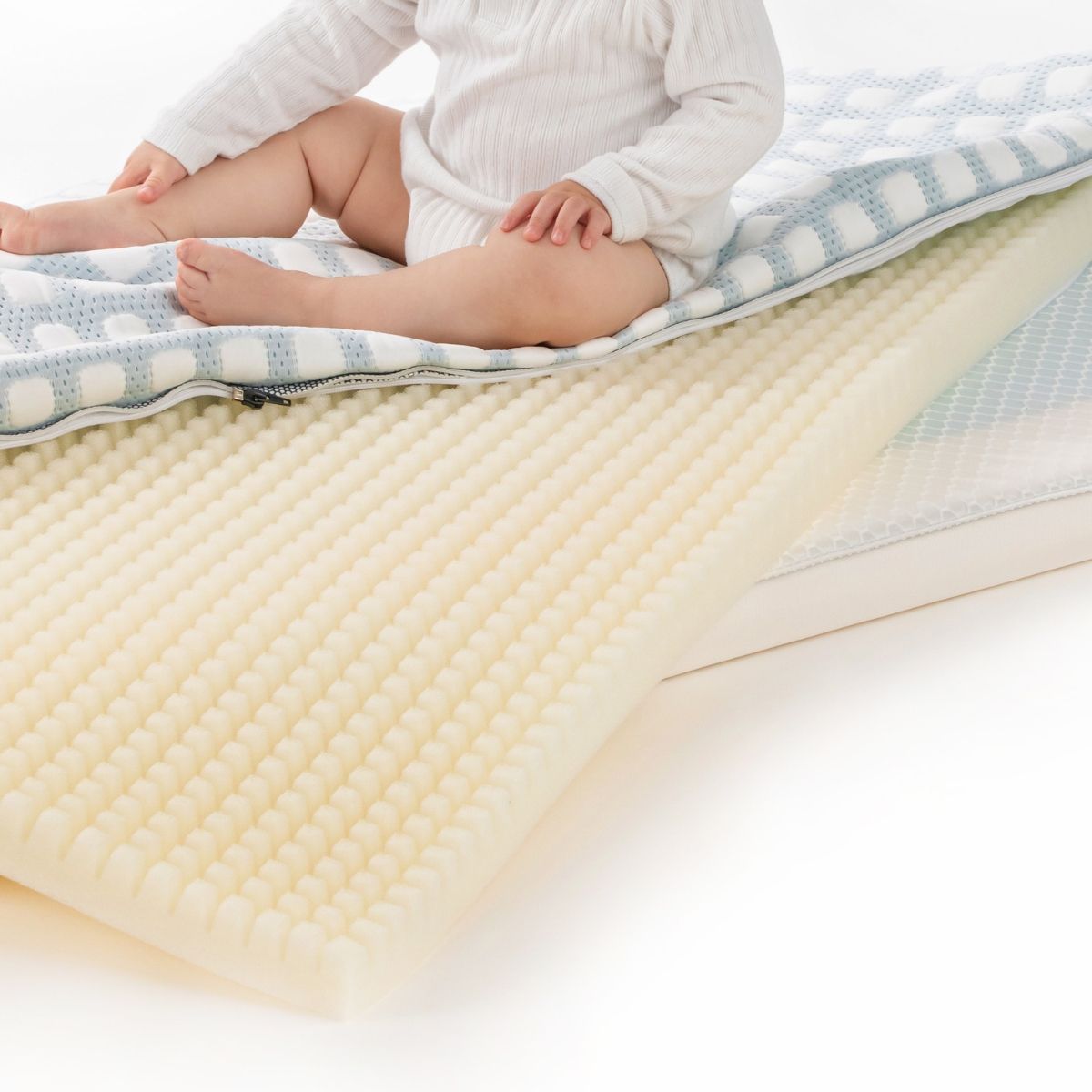
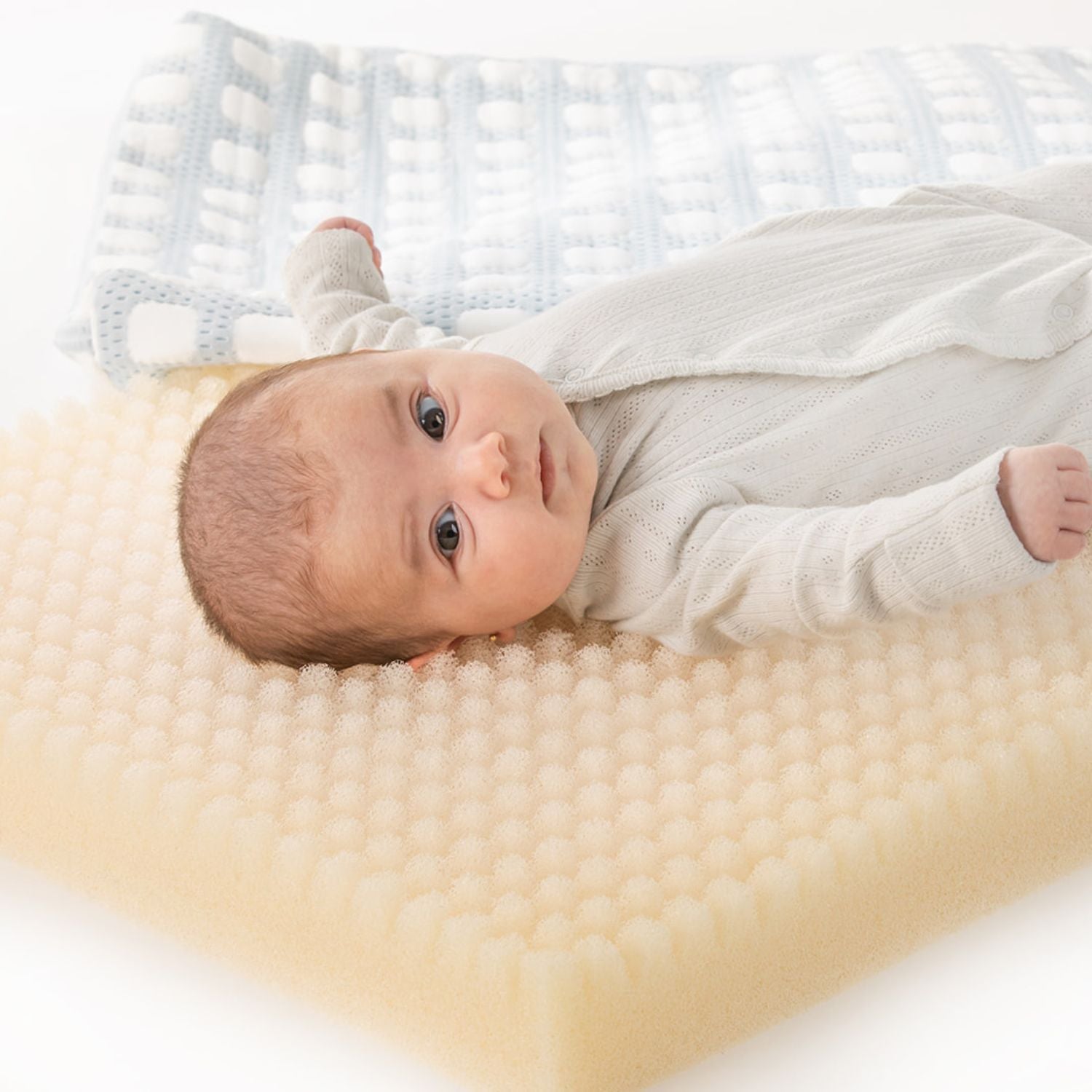
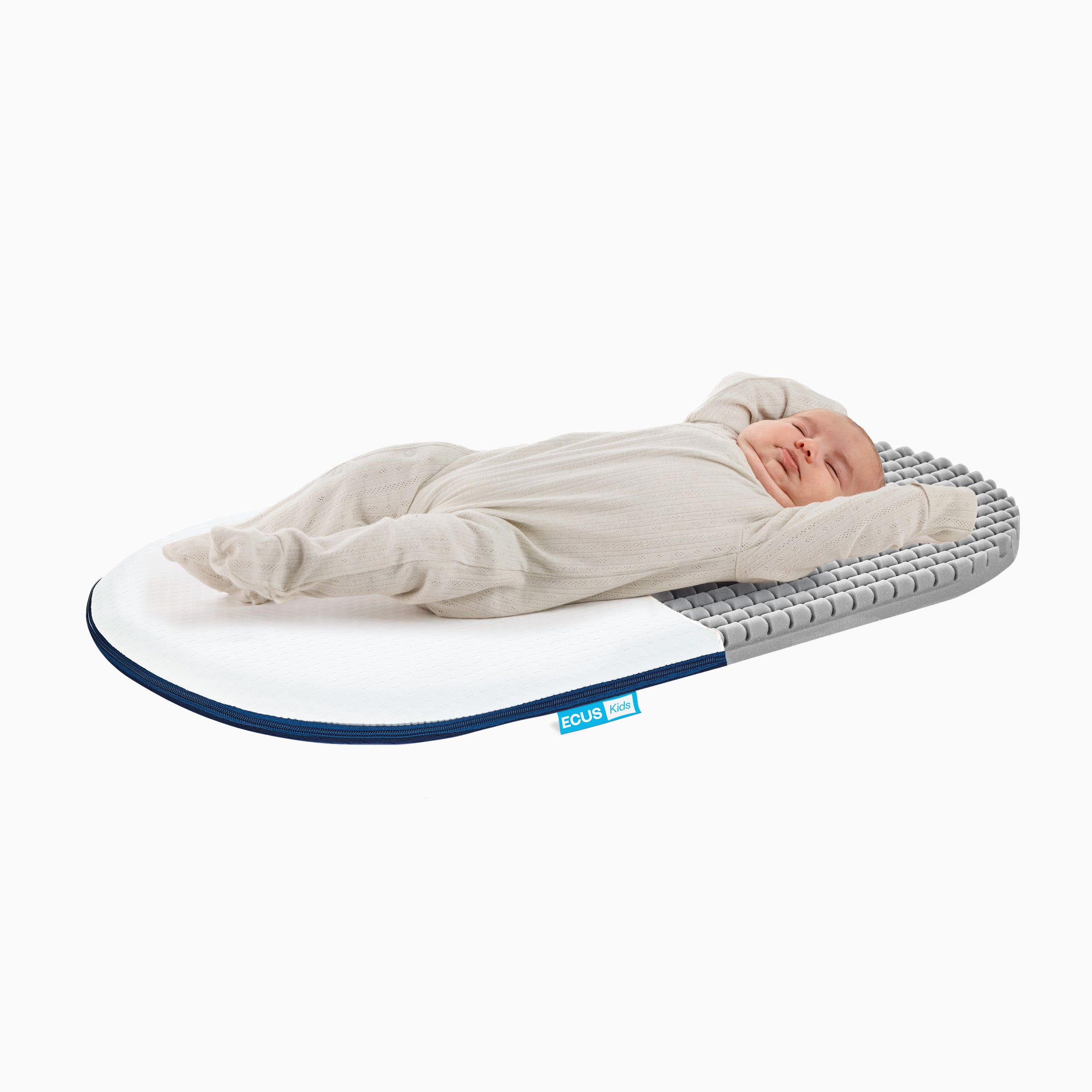
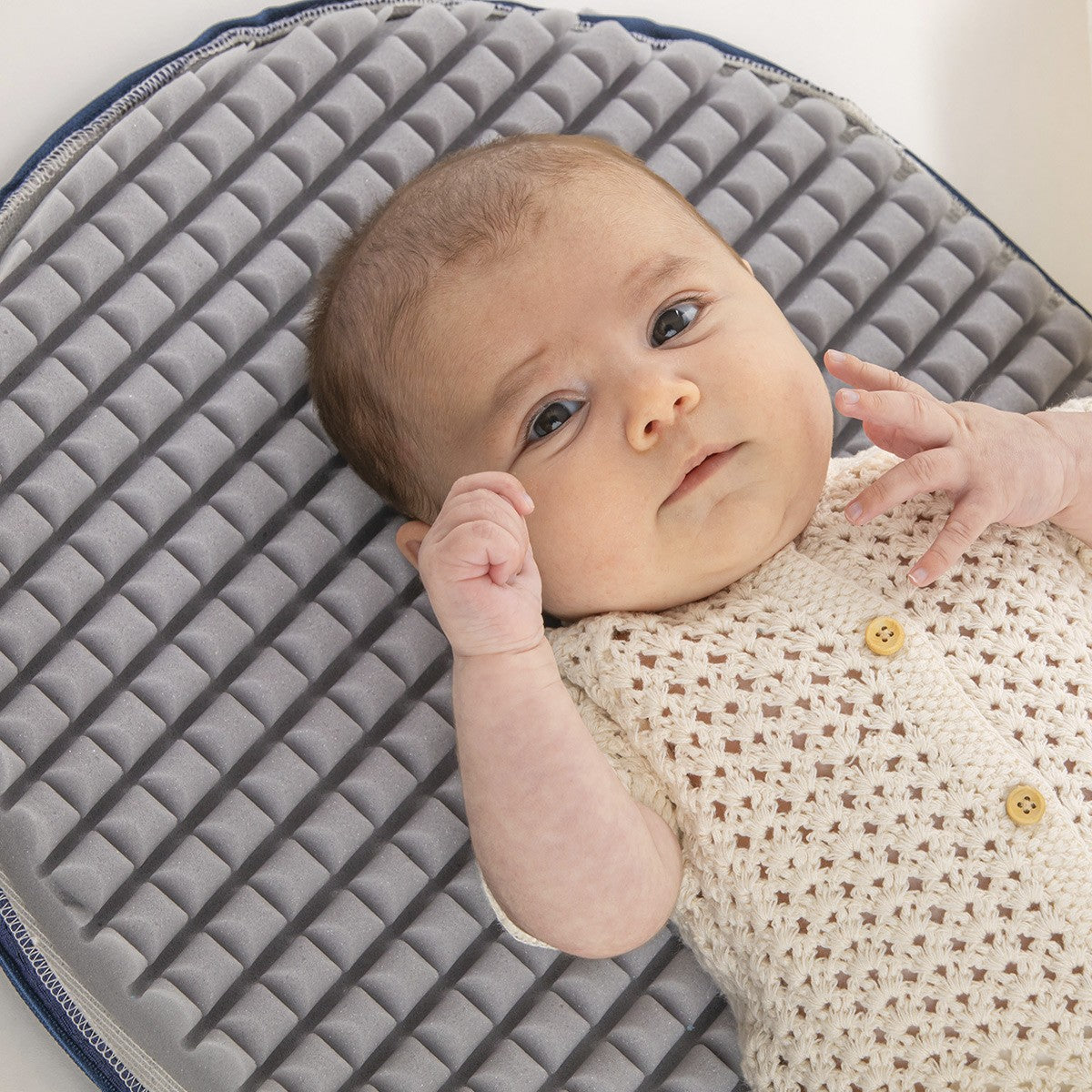
At ECUS Kids, we have designed the Care® cot mattress that reduces pressure on the baby’s head by up to 70%, thanks to its foam made up of small bubble-like shapes that provide lots of support points. This way, we can prevent plagiocephaly or help correct it if the baby already has it.

How can we prevent it?
Most cases of plagiocephaly are mild and can be resolved with simple measures.
In addition to using a mattress that reduces pressure, it’s important to limit the time your baby spends on hard surfaces such as the stroller or car seat, practice babywearing, regularly change the position of their head while they sleep, and, when they’re awake, place them on their tummy and encourage neck movement with play.
If plagiocephaly is suspected, it’s important to see your pediatrician or a specialist to do physiotherapy exercises and set out an appropriate treatment plan to prevent long-term complications.
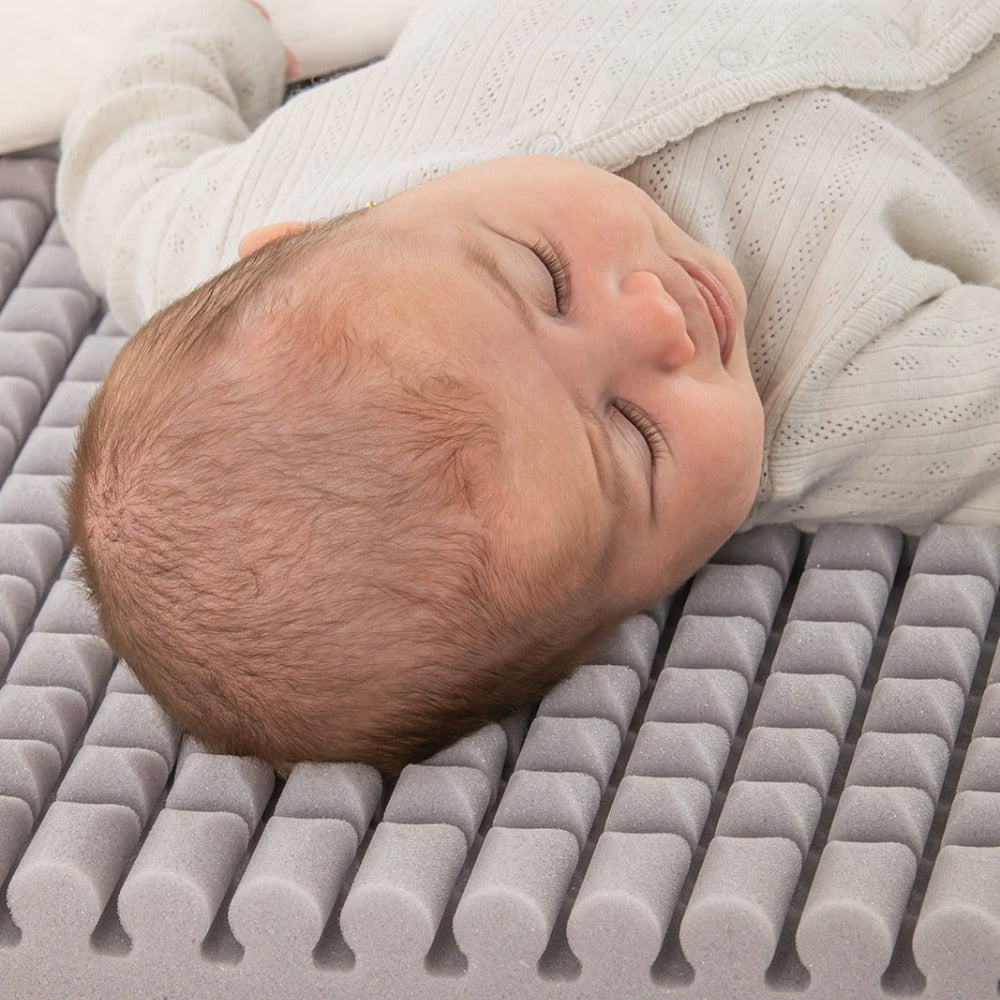
Care® range mattresses have been specifically designed to reduce pressure on the baby’s head.
Thanks to its foam shaped like small bubbles, the baby’s head never rests in the same way, preventing excessive and prolonged pressure on the same side of the head.
MINICOT AND CARRY COT MATTRESSES
Care® solutions for plagiocephaly


Do you want to know more?
If you want to learn more about plagiocephaly—its causes, consequences, and how to prevent it—take a look at our blog. You’ll find information and tips to help you take care of your baby’s little head. We can’t wait to share all the information you need!
What is plagiocephaly and how can I tell if my baby has it?
During the first months of life, the skull grows dramatically, which can cause an imbalance between the size of the body and the head and makes plagiocephaly harder to spot. On top of that, babies start to grow hair, which hides the flattening of the skull at first glance.
The best way to monitor the development of plagiocephaly is in the shower, when we wash the baby’s head and the hair sticks to the skull. We’ll look from above and from both sides; this way we’ll be better able to spot any possible asymmetry.
Main causes of plagiocephaly
A baby’s skull is very malleable because the cranial bone hasn’t fully formed yet, which means that any prolonged external pressure or a sustained posture can cause a deformation that’s visible to the naked eye.
The causes of plagiocephaly, or flat head syndrome, can occur during pregnancy or childbirth, but most commonly they originate from prolonged exposure to the same position of the baby’s head during sleep. This is what’s known as postural or positional plagiocephaly.
What are the consequences of plagiocephaly?
Besides the aesthetic deformity, plagiocephaly can also have consequences for a baby’s health and development.
Depending on the severity of the skull deformity, there may be a risk of hearing problems, vision problems, bite problems, and motor development problems. It has also been observed that children with plagiocephaly may have delays in cognitive and language development.
Plagiocephaly and other cranial deformities in babies
The shape of a baby’s head at birth is a common concern for parents and healthcare professionals. In some cases, newborns may develop cranial deformities, and it’s essential to understand the different shapes they can take and their possible causes.
Three of the most common cranial deformities in newborns are plagiocephaly, brachycephaly, and dolichocephaly or scaphocephaly.
Plagiocephaly is not just a cosmetic issue
Plagiocephaly, or a baby’s cranial deformity, is not just an aesthetic issue; if it isn’t prevented or treated in time and properly, it can lead to a more severe flattening of the head that can have long-term consequences for babies’ health and development.
There are more serious cases of plagiocephaly in babies that have been linked to other health problems. The deformity in the shape of the head can alter the position of the eyes, ears, and jaw, which can cause facial asymmetry.
How to prevent plagiocephaly?
Some of the simplest tips on how to prevent plagiocephaly are: gently reposition your baby’s head every 2 hours while they’re sleeping; avoid spending many hours in the stroller or car seat; encourage head movement through play and by placing them on their tummy while they’re awake; hold them in your arms and practice babywearing, as well as using a mattress that reduces pressure.
In short, encourage your baby’s head to move in some way and avoid constant pressure against hard surfaces.
Keep reading
How to prevent flat head in newborns?
In addition to the mattress, there are several habits that can help prevent positional plagiocephaly in newborns. Here are some very useful tips to keep your baby from always being in the same position:
- Tummy Time/ “tummy time”: Whenever your baby is awake and supervised, try to place them on their tummy for as long as possible. This practice will help strengthen your newborn’s neck muscles by encouraging them to move their head.
Which is the best anti-plagiocephaly mattress?
An anti-plagiocephaly mattress is one designed to prevent cranial deformation in babies and to help avoid the onset of plagiocephaly, or flat head syndrome. It can be a good preventive measure against plagiocephaly and help address problems derived from plagiocephaly in the medium and long term.
The surface where the baby rests should be a safe, breathable, and adaptive mattress, especially in the areas where it’s needed most, avoiding the continuous pressure exerted on the baby’s head.
Plagiocephaly: one problem, two solutions
Plagiocephaly affects 47% of babies. At ECUS Kids, we work to prevent postural skull deformities in newborns and infants through our Care mattress line.
Care series mattresses prevent and correct plagiocephaly, and are certified as medical devices by the Spanish Agency of Medicines and Medical Devices (AEMPS), part of the Ministry of Health. These features make it the safest crib mattress for your baby.
Should I be worried about plagiocephaly?
In general, plagiocephaly does not cause pain or discomfort for the baby, but it can affect their physical appearance. While they are still a baby, they won’t realize that their head has an abnormal shape or that they have facial asymmetry in the position of the ears, for example.
However, as they grow, they may start comparing their appearance with that of other children, feel uncomfortable, become the target of teasing, and their self-esteem may decrease.
April 4: World Plagiocephaly Day
April 4 marks World Plagiocephaly Day, a day that should help raise visibility and awareness about this skull deformity that affects 47% of babies and is becoming increasingly common, becoming one of the leading conditions treated in pediatric rehabilitation and pediatric care services.


