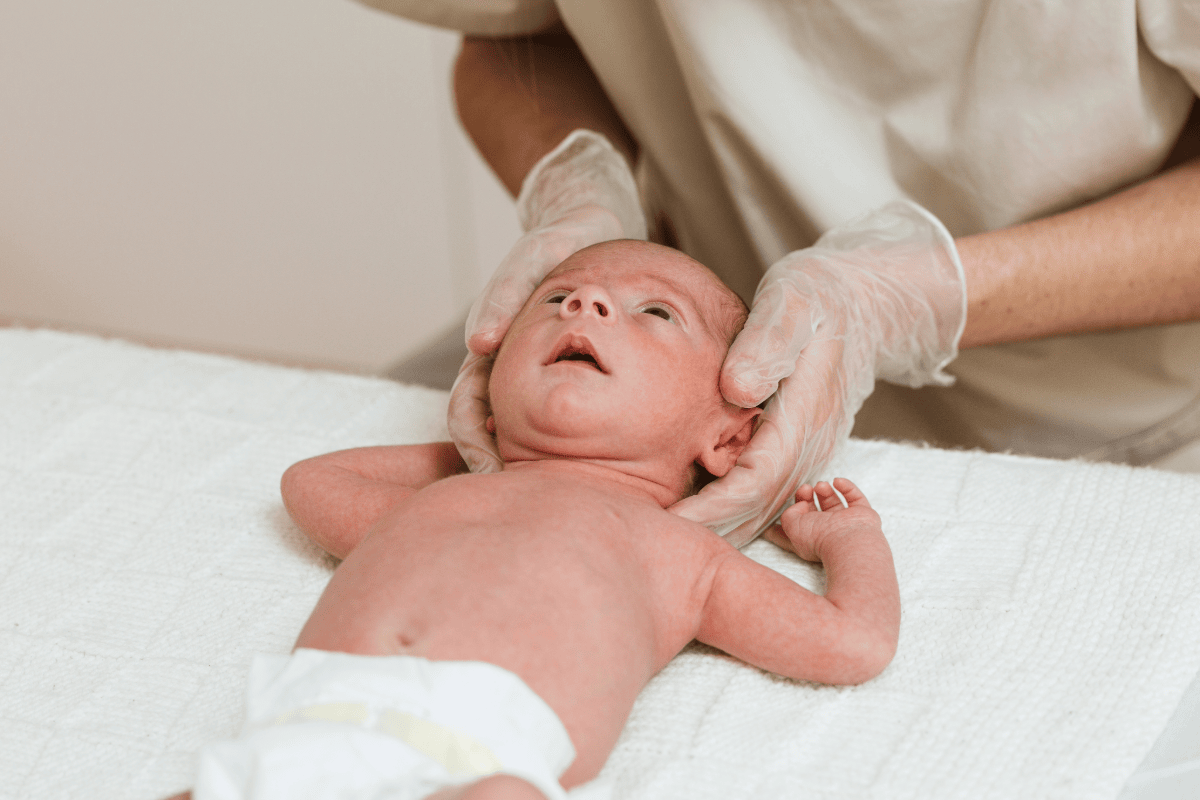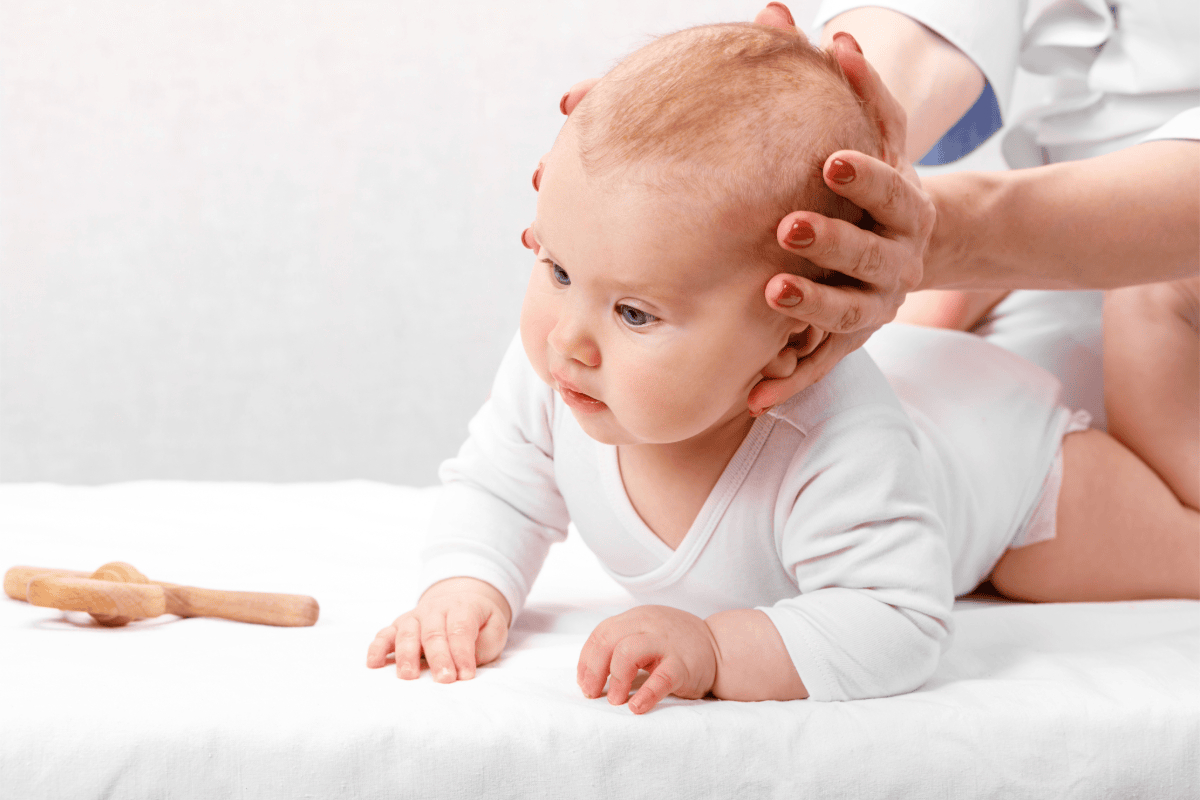

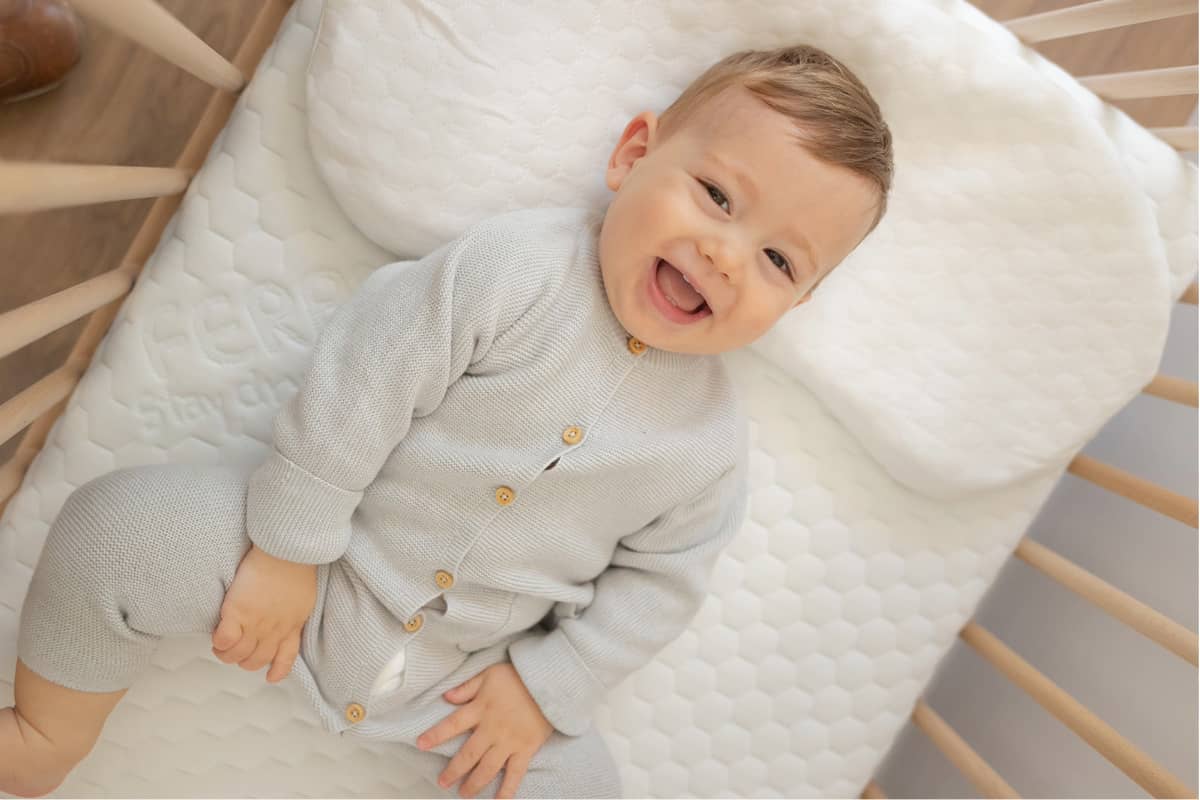
Plagiocephaly, or flat head syndrome, is a lateral flattening of the skull in babies that is usually caused by posture and is an increasingly common concern among parents. One of the most popular solutions on the market is the plagiocephaly pillow. Is its use recommended? Is it effective? Is it true that it helps prevent and correct postural plagiocephaly?
In this post, we will try to answer all your questions about this accessory: medical recommendations, benefits, dangers, and tips for use. If you are thinking of buying a pillow for your baby's plagiocephaly, this is for you!
Is the plagiocephaly pillow safe?
The Spanish Pediatric Association (AEP) advises against the use of cushions and pillows for newborns to prevent sudden infant death syndrome due to suffocation or entrapment. During the first months of life, it is recommended to keep the crib or space where the baby sleeps free of objects: no stuffed animals, cushions, or pillows.
Similarly, the AEP recommends that babies should start using pillows from the age of 2, when the development of their neck, head, and back allows it. Newborn babies have very short necks, so raising them with a pillow can cause damage, discomfort, and difficulty breathing normally.
That said, we might ask ourselves: is the plagiocephaly pillow unsafe?
The plagiocephaly pillow is safe as long as it is used correctly. Most medical specialists agree that these pillows are beneficial if used properly and always under supervision.
When should the plagiocephaly pillow be used?
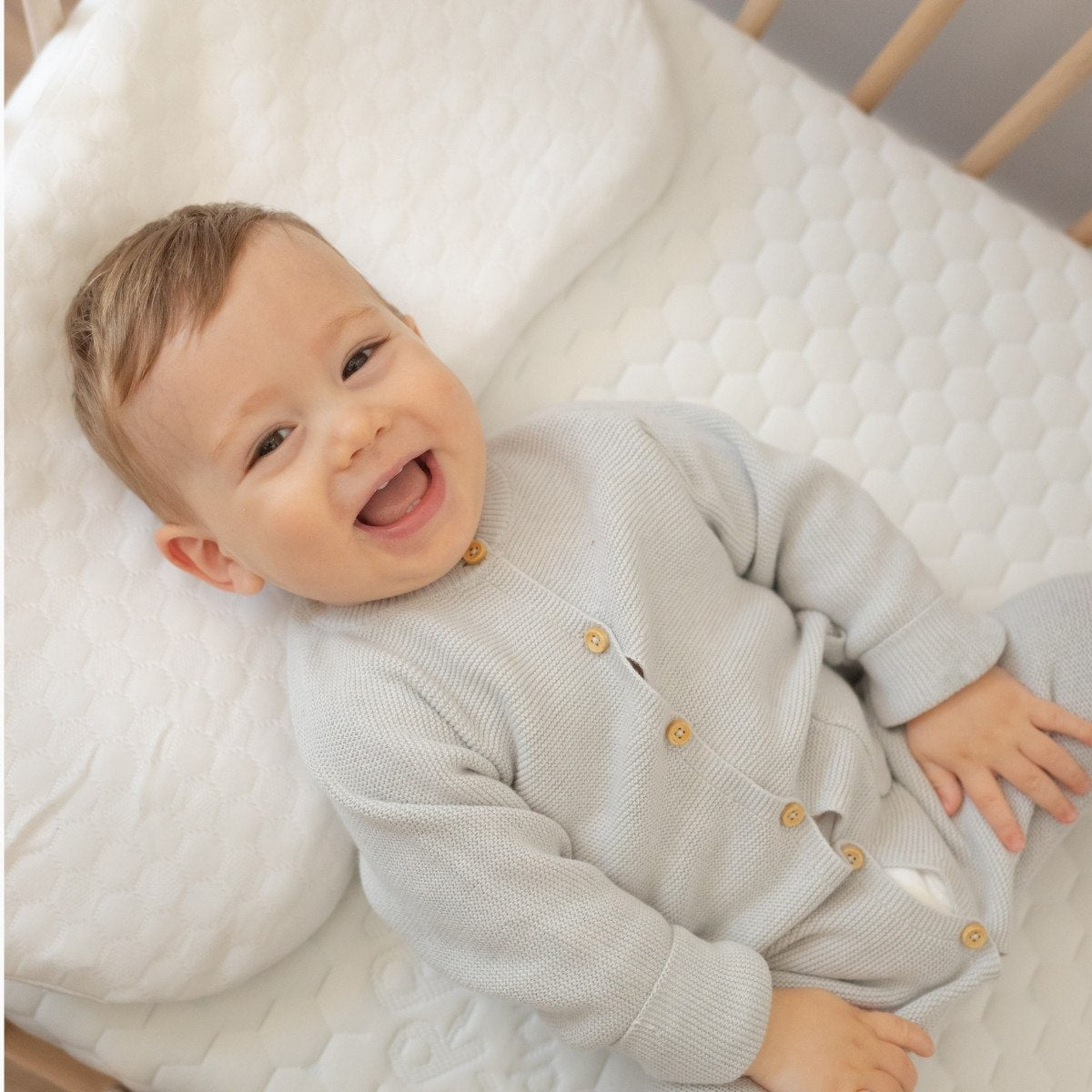
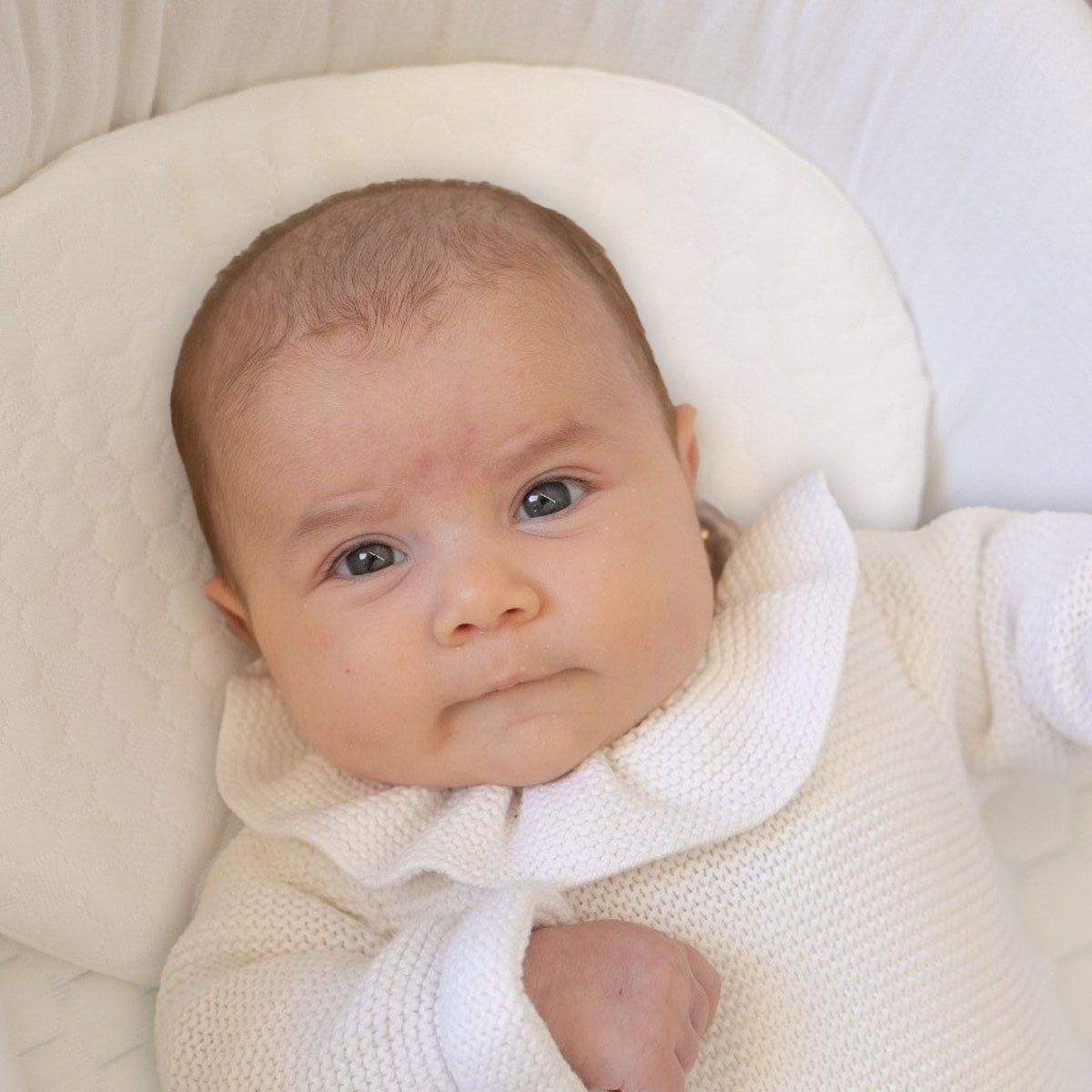
Plagiocephaly pillows should always be used when the baby is awake and/or under parental supervision. This is especially important during the baby's first year of life.
It is not recommended to use the pillow while the baby is sleeping and/or unattended due to the risk of suffocation and entrapment. To protect the baby while sleeping, it is preferable to purchase a mattress for plagiocephaly. From a medical point of view, if the baby unconsciously rolls over at night, they should lie on a stable surface that is not dangerous for their breathing.
The use of a pillow in the crib may only be recommended when the baby is approximately 1 year old, shows no signs of discomfort, and provided that the size of the pillow fits the size of the crib, so that there is no risk of it moving during the night.
Pillow without a hole: why is it the best option?
You may have noticed that many baby pillows have a hole or indentation in the center of the pillow. This hole is supposed to relieve pressure on the back of the baby's head by increasing the contact surface. While it is true that the pressure on the back of the skull may be reduced, what about the sides of the head?
The gap cannot prevent the baby from turning their head. Therefore, with a pillow of this type, the baby can continue to turn their head to their favorite side and the weight of the skull will continue to rest on the flattened side, leading to plagiocephaly.
Pillows with a hole in the center can help reduce brachycephaly (symmetrical flattening of the back of the head), but not plagiocephaly (flattening of one side of the head).
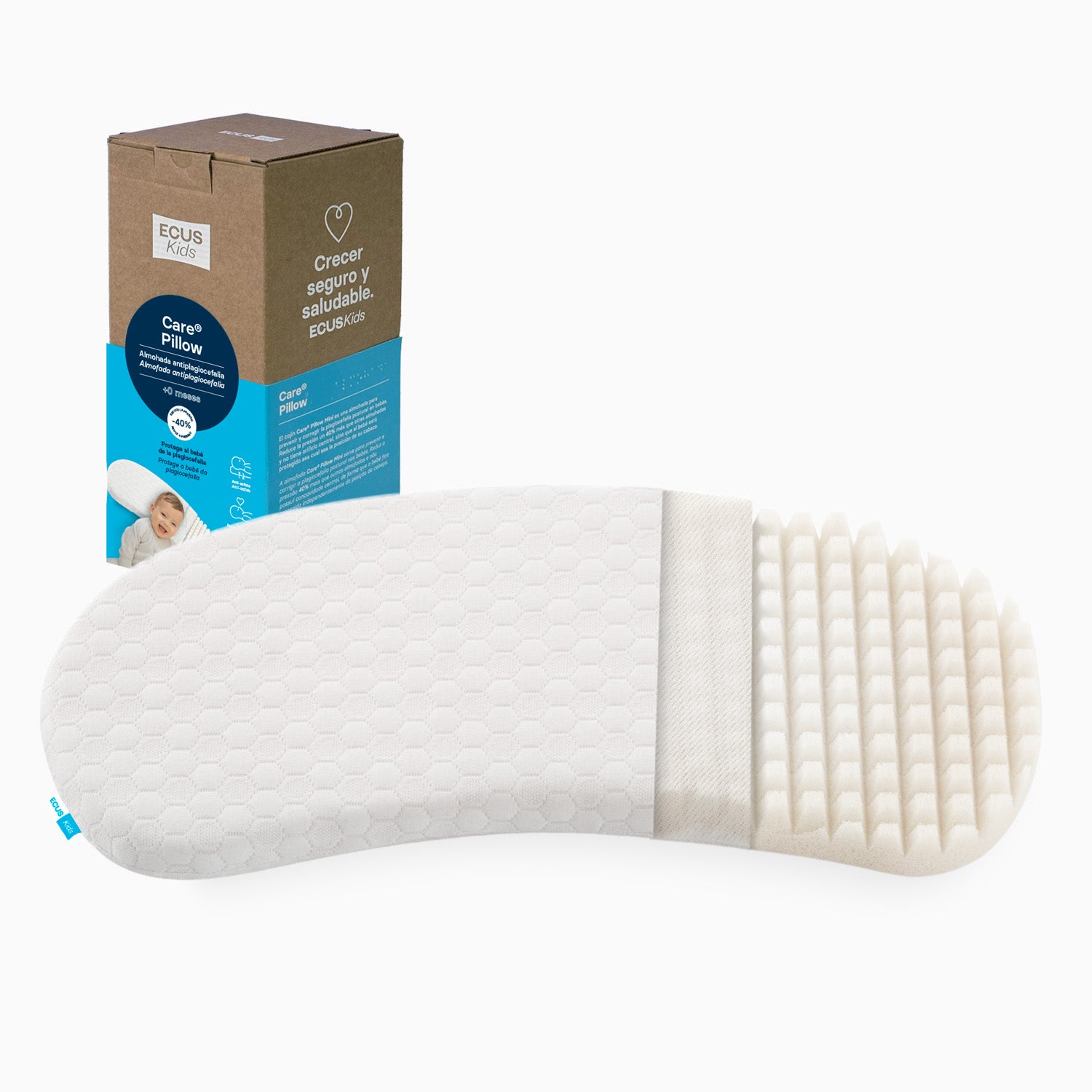
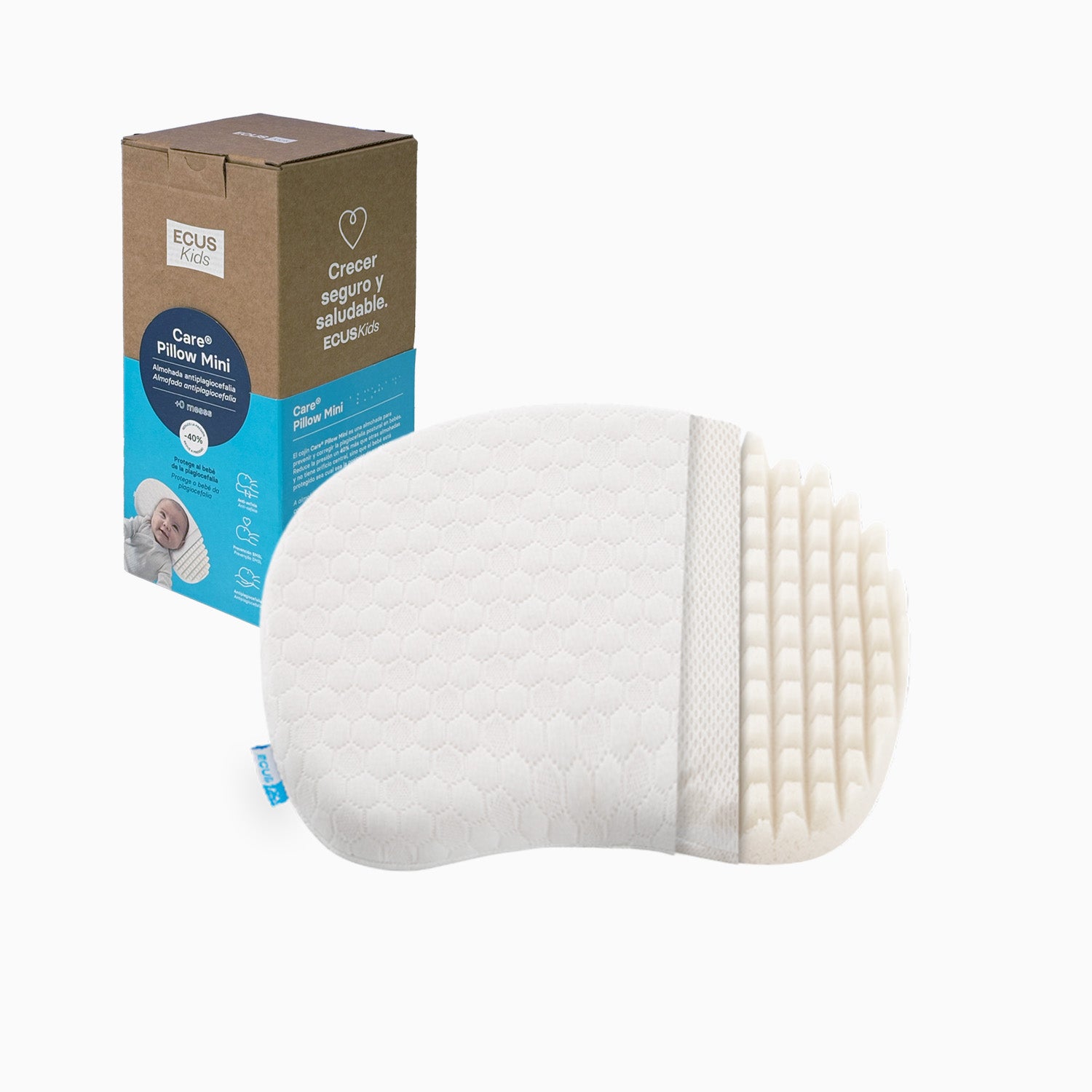
In contrast, the Care® Pillow has no hole, but rather its entire surface protects the baby from plagiocephaly equally. Its foam in the shape of small pyramids creates numerous pressure points, which, together with the free movement of the baby's head on the pillow, will help to round it so that it can develop with the correct morphology.
This is one of the main advantages of the Care® Pillow over other pillows and cushions for plagiocephaly on the market. The Care® Pillow prevents and corrects any type of posterior flattening, such as brachycephaly and plagiocephaly.
Is the plagiocephaly pillow effective?
The plagiocephaly pillow is effective when its design helps redistribute pressure on the baby's skull, avoiding pressure points that can cause the baby's head to flatten when resting and spending hours on it. If used from an early stage, this pillow can help prevent the onset of plagiocephaly and, if the baby already has it, can help correct it.
These types of pillows should be part of the plagiocephaly prevention and correction therapy carried out by parents at home. Under no circumstances should they be the only practice adopted. Parents should not relax and think that, because their baby uses this pillow or sleeps on an anti-plagiocephaly mattress, they no longer need to do anything else.
At ECUS Kids, we also recommend other practices that help prevent plagiocephaly, such as babywearing, tummy time, changing the position of the head often, changing sides when breastfeeding between feeds, etc.
Plagiocephaly cushions can be a useful tool in many cases, but it is important for parents to be properly informed and to follow the advice of healthcare professionals. In more severe cases of plagiocephaly, consult a pediatric physical therapist immediately. Your baby may need alternative measures such as sacro-cranial massage, the use of orthopedic helmets, etc.