

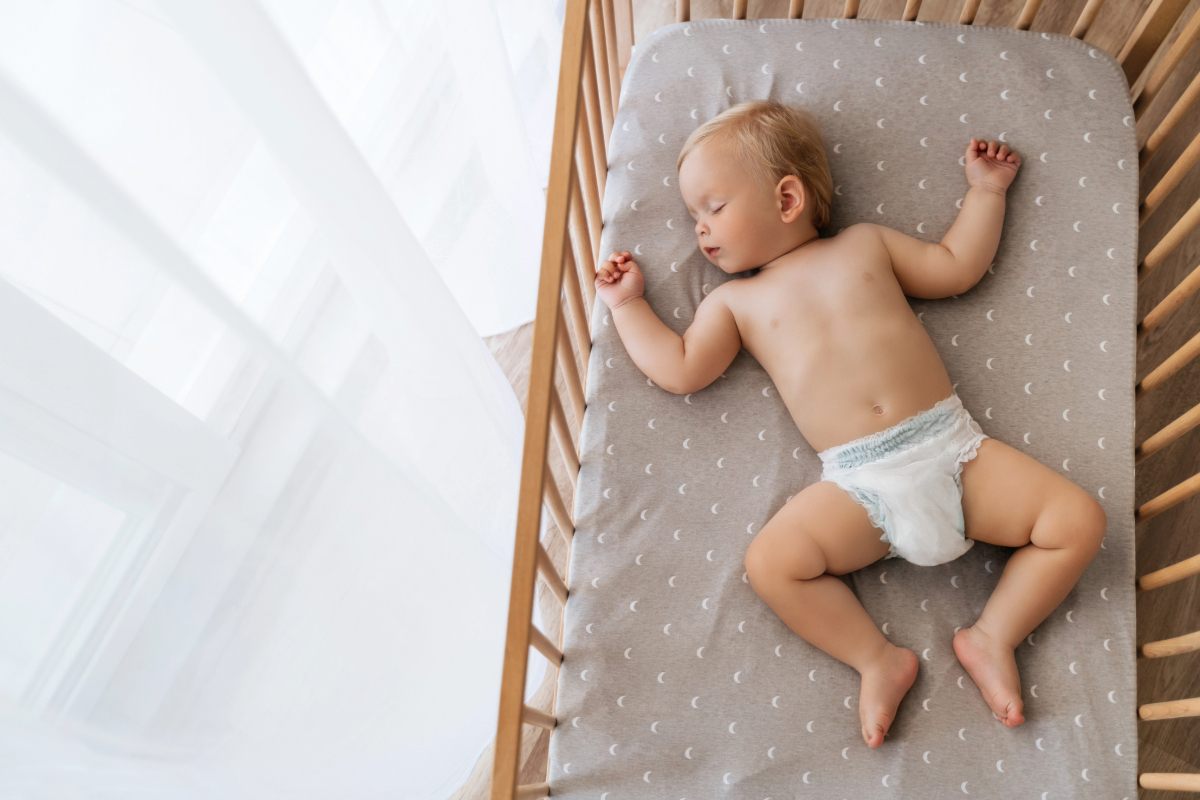
Creating a suitable sleeping environment for your baby is essential for their well-being and rest. Beyond providing comfort, a safe and quiet room contributes significantly to the cognitive and emotional development of young children, laying the foundation for long-term healthy sleep habits.
By establishing a sleep routine in a peaceful environment, babies learn to associate bedtime with feelings of calm and security. A suitable environment helps them feel protected and develop confidence and emotional stability, which influences their overall development.
A quiet room, free from distractions and excessive noise, helps babies sleep well and prevents sleep problems or risks such as sudden infant death syndrome (SIDS). It is important for babies to sleep in a safe place, on a firm surface free from objects that could disturb them. This ensures that babies rest well and grow up happy and healthy.
7 tips for creating the right environment in your baby's room
1. Temperature
Babies, like adults, do not sleep well if they are too hot or too cold. The problem is that babies cannot regulate their body temperature, especially when they are very young. They do not know how to uncover themselves if they are hot or cover themselves if they are cold.
The room where the baby sleeps should be at a comfortable temperature, generally between 18-22°C. Make sure the baby is neither too cold nor too hot. If you cover them, make sure the blanket is not too thick and does not pose a risk to the baby.
2. Darkness
Our biological clock is regulated by light and darkness; when it is dark, we know we need to sleep, and when it is light, we wake up. Therefore, it is advisable to keep the room as dark as possible at night to help your baby distinguish between day and night. You can use blackout curtains or blinds to block out any outside light.
3. Noise
Some babies can sleep with some background noise, such as a soft fan, quiet music, or white noise. This is because they are used to sleeping while listening to sounds from the womb. However, these sounds should be soft and constant, with no loud, sudden, or disturbing noises.
4. Safe crib
Ensure that the baby's crib complies with all safety standards. Bedding should fit snugly on the mattress and there should be no loose objects in the crib that could pose a risk of accidental suffocation, such as pillows, stuffed animals, etc.
5. Comfort
The mattress should be firm but comfortable and should reduce pressure on the baby's head and body to prevent flattening of the head, i.e., plagiocephaly.
6. Relaxing routine
Establish a relaxing routine before putting your baby to bed, such as a warm bath, a gentle massage, or reading a calm story. This can help calm your baby and prepare them for sleep.
7. Security
Before placing your baby in the crib, make sure they are lying on their back, which is the safest sleeping position and reduces the risk of sudden infant death syndrome (SIDS).
*Bonus tip! Use a baby monitor if it gives you peace of mind to be able to hear or see your baby while they sleep, especially if they are in another room.
What is your baby's bedroom like? Do you follow all these tips? Put them into practice and you will see how your baby's sleep improves. Remember that by creating a calm, safe, and comfortable environment for your baby, you can help them establish healthy sleep patterns from an early age.